
We All Have One: Window of Tolerance for Riders and Horses.
If you’ve ever felt your heart race before entering the show ring, or noticed your horse suddenly become reactive, tense, or shut down, then you’ve already seen the window of tolerance in action.
Understanding this concept can transform not only your riding performance but also your relationship with your horse.
What Is the Window of Tolerance?
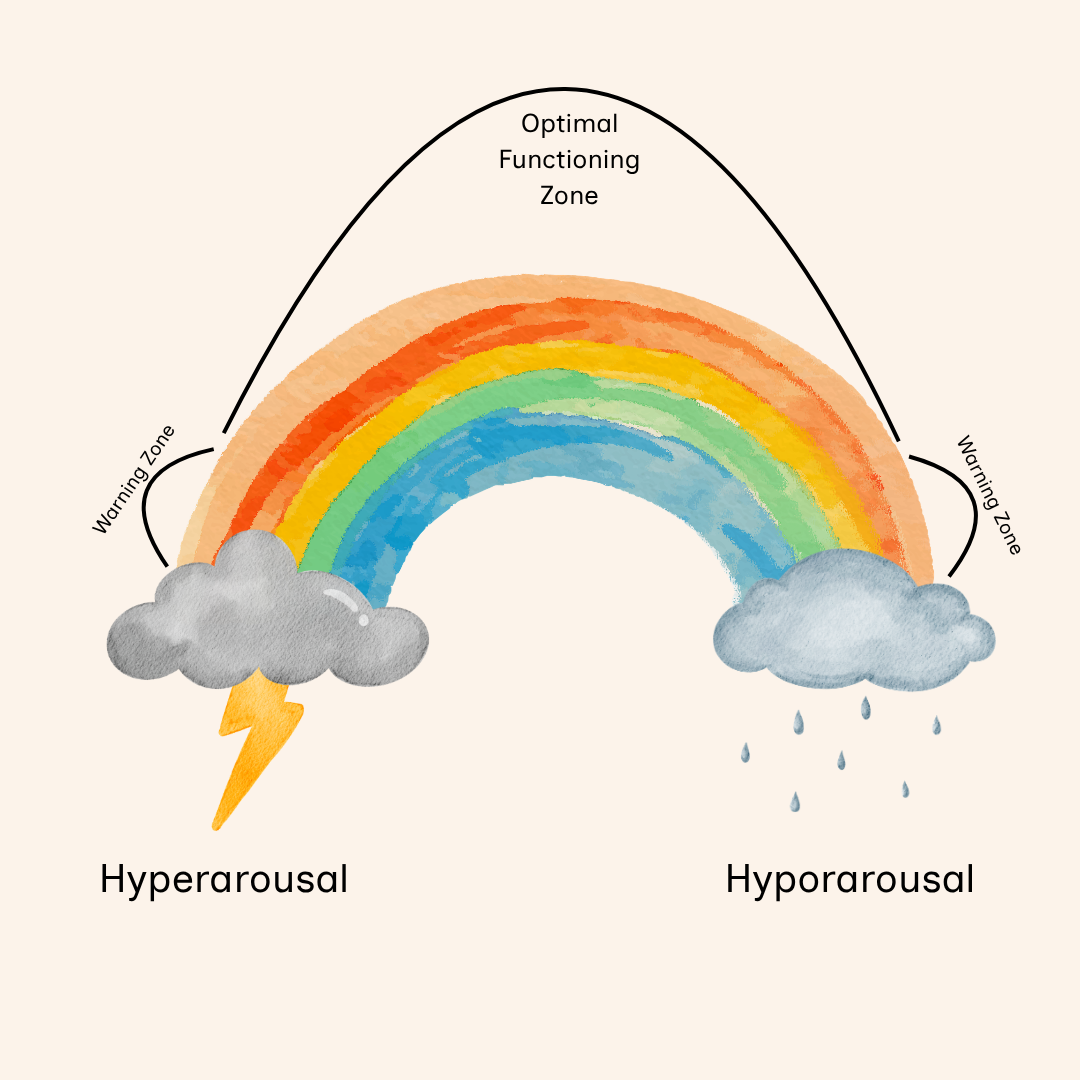
The window of tolerance is the zone where your nervous system is regulated and functioning at its best. Within this window, both horse and rider can:
Think clearly.
Respond (not react).
Learn effectively.
Stay present and connected.
When you’re inside your window, you feel grounded, focused, and in control. The same applies to your horse and they are attentive, responsive, and able to process cues.
What Happens Outside the Window?
When either you or your horse moves outside this window, the nervous system shifts into survival mode.
Hyperarousal (Too High)
This is the “fight or flight” state.
In riders:
Anxiety before or during rides.
Overthinking or panic.
Tension in the body.
In horses:
Spooking, bolting, or rushing.
High head carriage, tight muscles.
Ignoring cues or becoming reactive.
Hypoarousal (Too Low)
This is the “freeze” or shutdown state.
In riders:
Feeling disconnected or numb.
Low energy or lack of motivation.
Difficulty making decisions.
In horses:
Refusal to move forward.
Dull or unresponsive behavior.
“Checked out” or disengaged.
Why This Matters in Riding
Riding is a two-nervous-system sport. Your horse is constantly reading your body language, breathing, and tension. If you’re outside your window, your horse will often follow, and vice versa.
This can create a feedback loop:
Nervous rider → tense horse → more nervous rider
Shut-down horse → frustrated rider → more shutdown
How to Stay Within Your Window
1. Regulate Yourself First
Try:
Take slow, deep breaths, or try box breathing.
Relax your shoulders and jaw.
Take a break or step away for a few minutes until you feel calmer.
2. Meet Your Horse Where They Are
If your horse is outside their window, training won’t stick. Oftentimes, pushing through often backfires and creates more problems down the road.
Instead:
Slow things down.
Return to familiar exercises.
Give them time to settle.
3. Build the Window Over Time
The goal isn’t to avoid stress, it’s to expand your capacity to handle it. The same applies to your horse’s ability to manage new or scary things.
You can do this by:
Gradually introducing new challenges.
Ending rides on a regulated note.
Creating consistent, predictable routines.
Take breaks when needed.
4. Normalize the Experience
Everyone moves outside their window sometimes. We all have experiences where we react in ways that we’re not proud of looking back, or where we feed off of our horse’s emotions, or vice versa, and things get tough. It’s not failure. It’s information.
Next time you notice yourself getting dysregulated, ask yourself:
What pushed me (or my horse) outside the window?
What helped bring us back?
This is where the real work happens.
The Takeaway
The best rides don’t come from pushing harder, they come from staying regulated.
When both you and your horse are within your window of tolerance, you create better communication and performance, as well as have safer rides where you can build a relationship with them. Ultimately, a more enjoyable experience for both of you. Your horse doesn’t need perfection, they need a rider who can notice, adjust, and come back to baseline with them.
